Our story
Why I built Mantle
The drives, catalogs, and client requests behind the app.
What made you realize you needed Mantle?
My archive grew one external drive at a time. When I needed more space, I bought another drive. Over the years, that left me with work spread across different disks, along with the copies I had made to protect it.
The question was no longer simply whether I had made backups. I wanted to know which files had another copy, where that copy was, and whether I had missed anything along the way. At the scale of my archive, I could not keep that picture in my head.
I was also thinking about what happens when a drive starts to fail. Finding a gap at that point is very different from finding it while you still have time to make another copy.
That was one of the starting points for Mantle: a clearer view of the files and storage I already had.
What became difficult even when you had backups?
I typically created a separate Lightroom catalog for each shoot. The photographs and catalog stayed together in a folder, and that worked well for me.
The confusion came later. There might be another copy of the catalog, edits made in one location, and exports sent to a client from somewhere else. When I returned to a photograph, I could find a RAW file but still be unsure which catalog contained the edit I wanted.
Long shoots sometimes made things more complicated. A working drive would fill up, so some files would move to another drive. Back home, I had to work out which files were where and how they related to the catalogs.
I did not want to abandon the tools I used. I wanted a clearer way to connect the original, the editing work, and the files that came out of it.
What kind of everyday request helped shape the product?
A client might get in touch wanting to license a photograph. Sometimes they have a filename. Sometimes they send the picture itself or a screenshot.
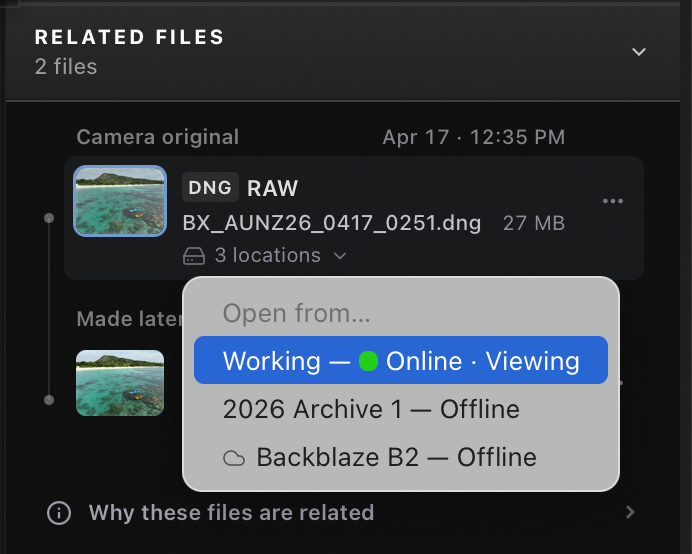
That is a straightforward request, but answering it can mean finding the original, checking the relevant edit, and working out which drive needs to be connected. I wanted that path to be much easier to follow.
I also wanted to keep the context around the work. A published tear sheet, a release, an invoice, or a project file can matter long after a shoot is finished. Those things often end up separated from the photographs.
For me, an archive is not only a collection of images. It also holds the information that helps you use those images again.
What do you want Mantle to make possible over time?
Even a well-backed-up archive can be difficult to search. There may be photographs and footage you have not looked at for years because you no longer remember which folder or drive contains them.
I want Mantle to help bring that work back into view. That matters whether your storage needs attention or you already have a backup system you trust.
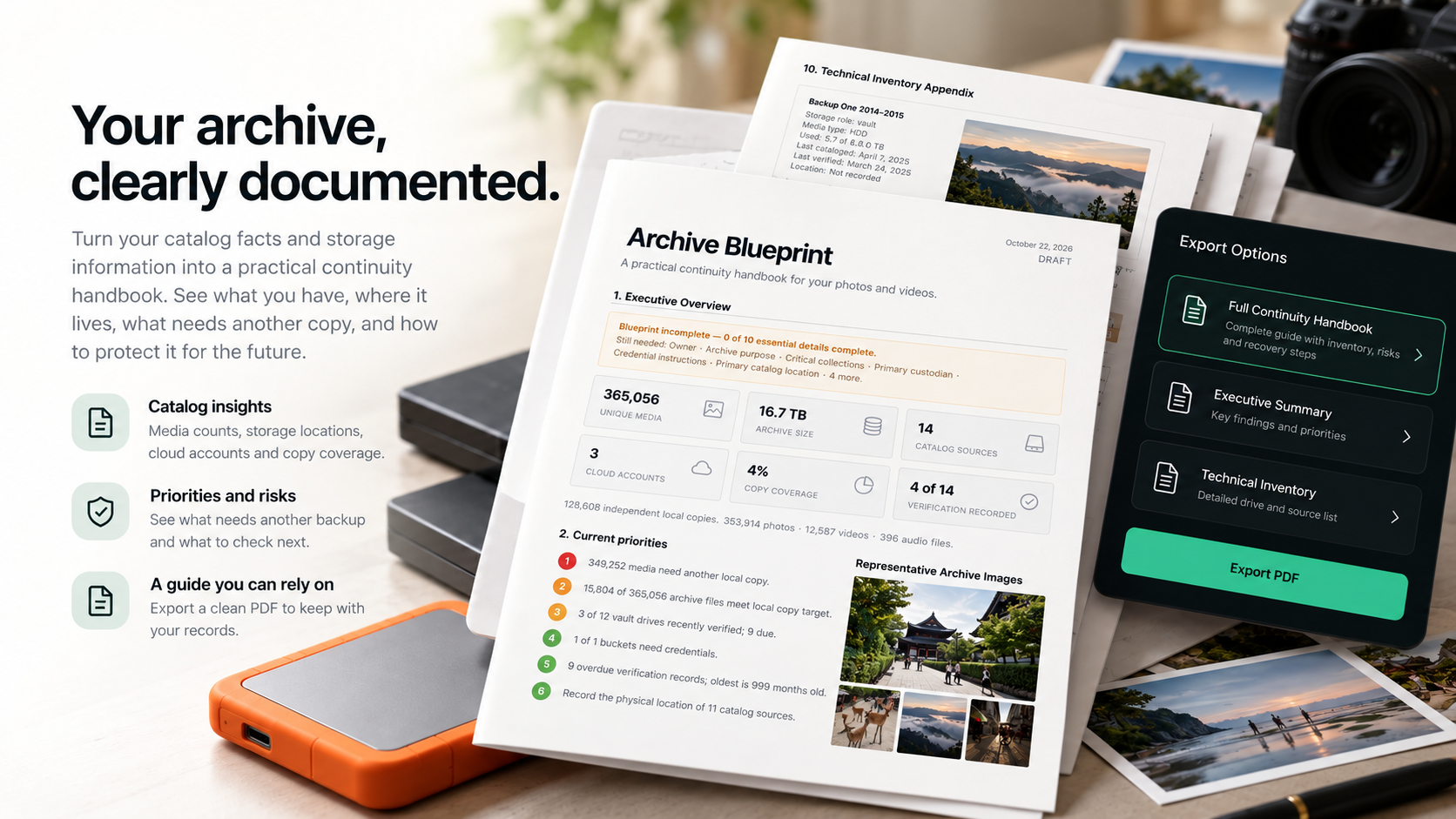
I also think about someone else needing to understand the archive one day: a family member, a gallery, or a trust. Where is the important work? Which drives hold it? What instructions would they need?
That thinking led to Archive Blueprint. An archive should not depend entirely on the memory of the person who built it. I want Mantle to help make years of work easier to find, look after, and pass on.